Minerva Clinical Intelligence
AI empowered clinical treatment

Our Vision

Getting every patient the 24/7 attention, focus and knowledge no human team can deliver on their own. Minerva Clinical AI deployed at scale, the effect is not a breakthrough in any single case but the steady closing of a gap — between the care a patient receives and the best care the evidence could have supported. The junior doctor at 3am has what the professor has. Every fluid decision, every ventilator adjustment, every titration informed by the outcomes of a hundred thousand patients who came before. Medicine has never had a reliable way for what was learned from the last patient to reach the next one in time to matter. That is what a clinical agent platform is for.

Where the Minerva goes next

The first apps stay close to critical care, because that is where the data is richest, the decisions are most frequent and the evidence base already exists. But the underlying method — a risk-aware agent choosing a dose from a patient’s trajectory — is not specific to the ICU.

Later waves move into chronic disease, where the same sequential-dosing problem plays out over months rather than hours, and where personalised support between appointments barely exists today. The clinical question changes; the mathematics does not. What changes with it is the time horizon over which a decision’s consequences appear — and reinforcement learning is precisely the tool built for delayed consequences.

Each app is a distinct clinical problem needing its own evidence, its own validation and its own regulatory approval. What they share is the platform beneath them — and that is the difference between building one medical device and building a category.

What success would mean

If the observed clinical signals translate at scale — mortality around 3–4% lower where clinician and AI agreed on the treatment action — the modelled upside is on the order of ~5,000 UK and ~30,000 US lives per year, up to ~10% more effective ICU capacity, and roughly £70M in direct NHS savings and $1.6B in direct US care savings annually. These modelled figures are illustrative scale-ups of observed effect sizes, not forecasts; they depend on regulatory clearance, prospective validation and adoption, none of which is assured.

Our Founders

Our founders provide board-level clinical and technical leadership, supported by a growing operating team across product and EHR integration, regulatory, quality and safety, and clinical operations and partnerships.
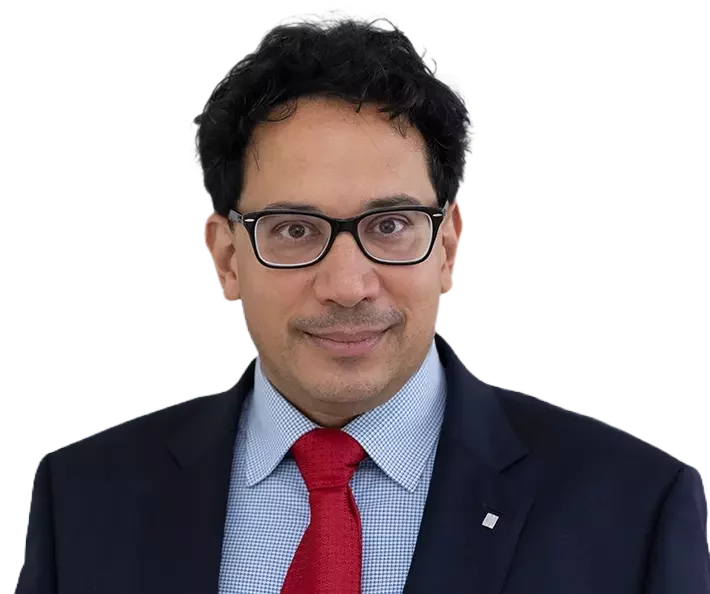
Prof. Aldo Faisal, PhD

20+ years of AI & ML in Biomedicine research;

Director, UKRI Centres in AI for Healthcare, London;

Professor at Imperial College London (UK) &
Professor at  Universität Bayreuth (Germany);

UKRI Turing AI Fellow;
Former Science & Innovation Director, Alan Turing Institute;
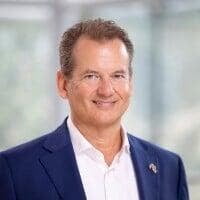
Prof. Anthony Gordon, MD MBE

20+ years critical  care authority with global trial leadership; 
Chair of Anaesthesia & Critical Care, Imperial College London (UK);
NIHR Senior Investigator;
Director of NIHR's Healthcare Technology Assessment;
Fellow of the Academy of Medical Sciences